Portuguese designer Susana Soares has developed a device for detecting cancer and other serious diseases using trained bees.
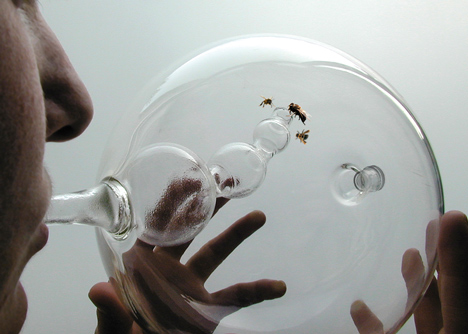
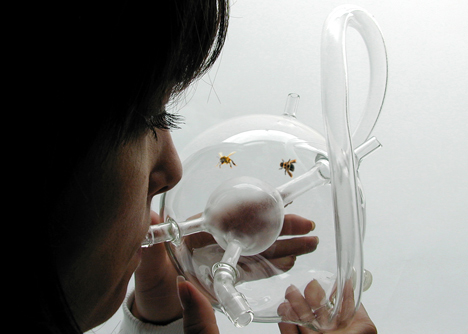
The bees are placed in a glass chamber into which the patient exhales; the bees fly into a smaller secondary chamber if they detect cancer.
“Trained bees only rush into the smaller chamber if they can detect the odour on the patient’s breath that they have been trained to target,” explained Soares, who presented her Bee’s project at Dutch Design Week in Eindhoven last month.

Scientists have found that honey bees – Apis mellifera – have an extraordinary sense of smell that is more acute than that of a sniffer dog and can detect airborne molecules in the parts-per-trillion range.
Bees can be trained to detect specific chemical odours, including the biomarkers associated with diseases such as tuberculosis, lung, skin and pancreatic cancer.
Bees have also been trained to detect explosives and a company called Insectinel is training “sniffer bees” to work in counter-terrorist operations.
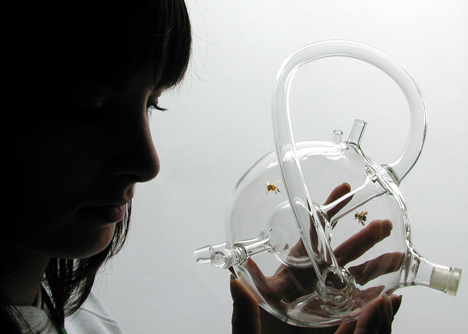
“The bees can be trained within 10 minutes,” explains Soares. “Training simply consists of exposing the bees to a specific odour and then feeding them with a solution of water and sugar, therefore they associate that odour with a food reward.”
Once trained, the bees will remember the odour for their entire lives, provided they are always rewarded with sugar. Bees live for six weeks on average.
“There’s plenty of interest in the project especially from charities and further applications as a cost effective early detection of illness, specifically in developing countries,” Soares said.
Leave a Reply